Agentic AI: The Next Frontier in Artificial Intelligence
Artificial Intelligence (AI) has already transformed industries with machine learning, natural language processing, and computer vision. However, the next wave of AI innovation is not just about generating answers or classifying data — it’s about autonomous decision-making, goal pursuit, and continuous improvement. This emerging paradigm is called Agentic AI.
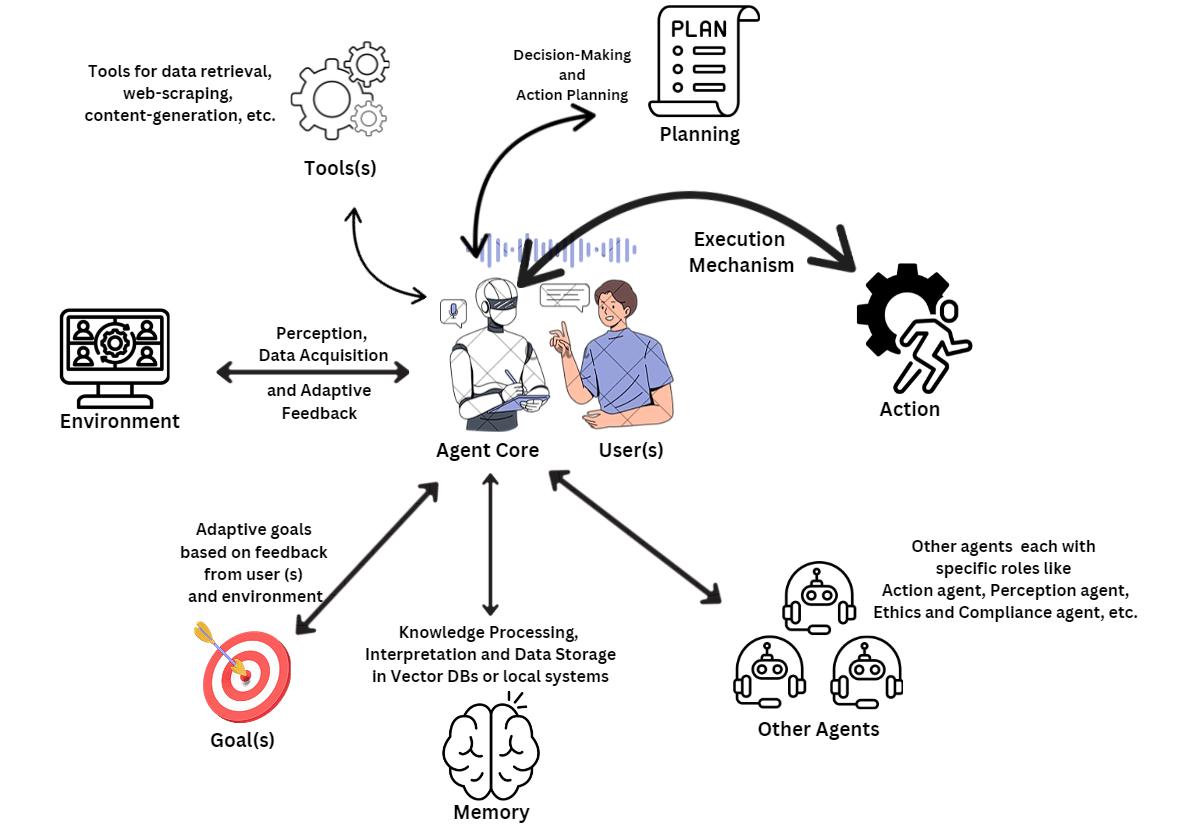
What is Agentic AI?
Agentic AI refers to AI systems designed to operate as autonomous agents. Unlike traditional AI models that passively respond to queries or execute predefined instructions, agentic AI systems can:
- Set and prioritize goals
- Plan multi-step actions
- Adapt to changing conditions
- Execute tasks without constant human input
- Learn from feedback and experience
Think of it as moving from a “smart assistant” to a “self-driven collaborator”.
How Agentic AI Differs from Traditional AI
Feature | Traditional AI | Agentic AI
-------|--------------|-----------------
Control Flow | Human-driven (reactive) | AI-driven (proactive)
Task Execution | Single-step | Multi-step, goal-oriented
Adaptability | Limited | Dynamic and context-aware
Learning Approach | Mostly offline training | Continuous learning and improvement
Examples | Chatbots, Image classifiers | AutoGPT, LangGraph agents, AI-driven workflow managers
Core Capabilities of Agentic AI
-
Goal-Oriented Planning
-
Breaks down high-level objectives into actionable tasks.
-
Example: Given “Plan a marketing campaign”, the AI can create timelines, content drafts, and outreach strategies.
-
Autonomous Decision-Making
-
Chooses actions based on current progress and available data.
-
Example: If inventory is low, it can trigger an automated reordering process.
-
Memory and Context Retention
-
Remembers past interactions, preferences, and outcomes.
-
Enables long-term, personalized strategies.
-
Self-Reflection & Improvement
-
Learns from mistakes and optimizes future actions.
- Similar to how humans refine skills over time.
Popular Frameworks & Tools for Building Agentic AI
- LangChain – A framework for chaining LLM calls and integrating with tools.
- AutoGPT – An experimental open-source agent that can perform autonomous tasks.
- CrewAI – Multi-agent collaboration framework.
- LangGraph – For building stateful, event-driven agent workflows.
- OpenAI’s GPTs with Actions – Customizable agents with API and file access.
Applications of Agentic AI
1. Business Operations
- Automated market research
- Supply chain monitoring and optimization
- Contract review and compliance tracking
2. Personal Productivity
- Smart scheduling assistants
- Autonomous content creation
- Financial planning bots
3. Healthcare
- Patient monitoring and treatment plan adjustments
- Drug discovery pipelines
4. Software Development
- AI agents that debug, write, and test code
- Continuous deployment and monitoring
Challenges & Risks
While the possibilities are exciting, Agentic AI brings new challenges:
-
Control & Safety
-
How do we ensure agents act within ethical and legal boundaries?
-
Explainability
-
Multi-step autonomous actions can be harder to audit.
-
Over-Reliance
-
Businesses may become dependent on agents without human oversight.
-
Security
-
An autonomous system with API and system access is a high-value target for attackers.
The Future of Agentic AI
We are at the early stages of agentic AI adoption. Over the next few years, expect:
- Multi-Agent Collaboration – AI agents working together like human teams.
- Adaptive Tool Use – Agents dynamically selecting the right software or APIs to achieve a goal.
- Tighter Human-AI Partnerships – Co-pilots that not only assist but also initiate work.
- Stronger Governance Frameworks – Policies and tools to ensure safety and compliance.
Conclusion
Agentic AI represents a leap forward from passive intelligence to proactive intelligence. By giving AI systems the ability to set goals, make decisions, and act autonomously, we unlock vast potential for efficiency, creativity, and problem-solving.
However, with great autonomy comes great responsibility. Building safe, transparent, and aligned agentic systems will determine whether this technology becomes a trusted partner or a risky wildcard.
The question is no longer “Can AI think?” — it’s “Can AI act responsibly?”
💬 What’s your take on Agentic AI? Are you excited, cautious, or both?
If you want, I can also make a diagram showing how Agentic AI works in Markdown-friendly format so this post becomes even more engaging. That would make it more visually appealing.